
How to Choose the Right Artwork for Your Space
A Practical Guide for Homes and Businesses
More Than Just a Pretty Picture
Choosing artwork should be one of the most enjoyable parts of designing a space — yet for most people, it's where they freeze. Walls remain empty for months, or a hurried, last minute purchase ends up as a mistake the moment it’s hung.
The reality is that artwork is not just decorative. It plays a critical role in shaping how a space feels, functions and communicates. The right piece can create calm, add energy, build trust or tell a story. The wrong piece can feel disconnected or diminish the overall experience.
Research into neuroaesthetics shows that art isn't just decor; it’s a mood-shifter and it actually alters our perspective of a space, making it a strategic choice rather than a finishing touch.
This guide breaks the process of choosing the right artwork into clear, practical steps so you can choose artwork with confidence and intention.
How to Choose Artwork That Fits the Mood of Your Space
Before considering colour, size or style, start with a more important question: how should the space feel?
Art has a direct influence on mood. Soft, abstract pieces can create calm and openness, while bold, high-contrast works can energise and stimulate. Nature-based artwork is often associated with relaxation and restoration, which is why it is commonly used in homes and wellness environments.
Recent trends reflect this shift. People are increasingly choosing art based on emotional connection rather than purely visual coordination. This "feel-first" approach leads to spaces that are more engaging and personally meaningful.
When you define the emotional outcome first, every other decision becomes easier.
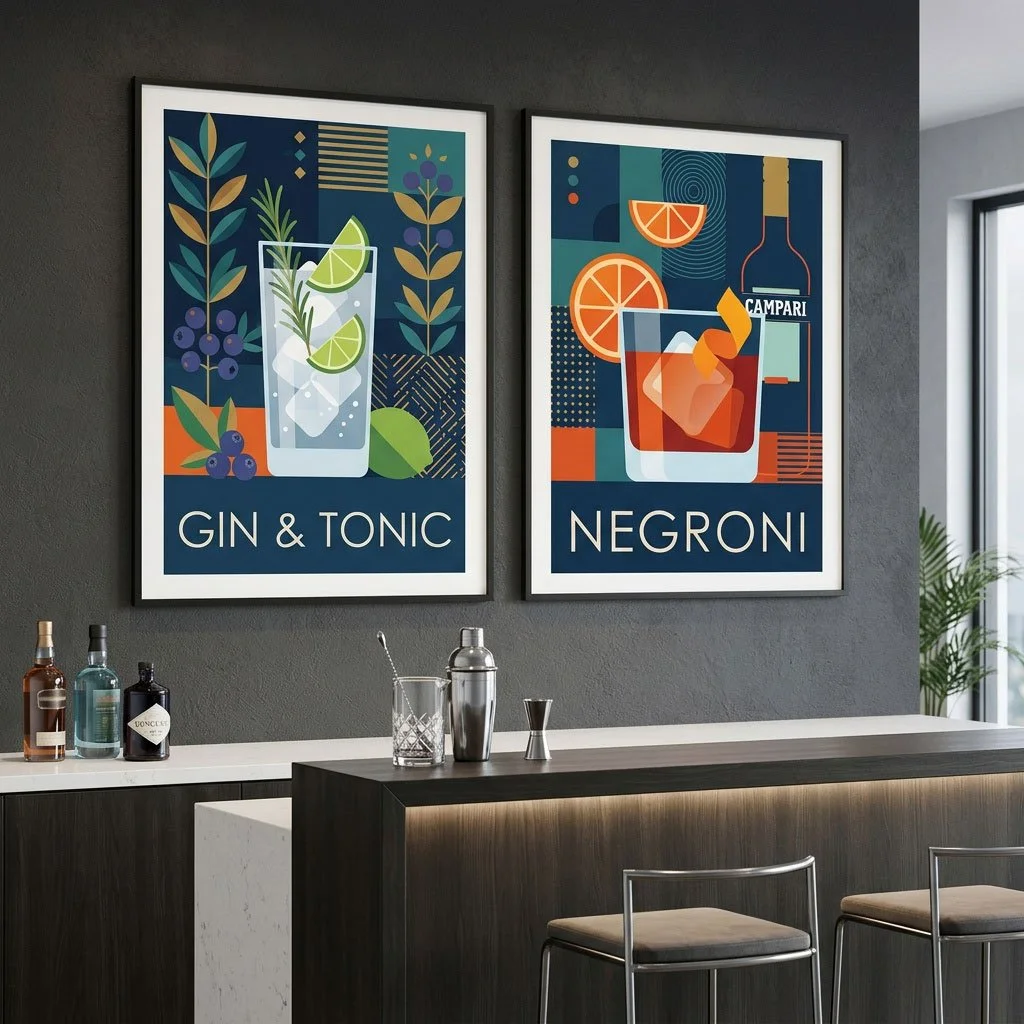
Even very simple prints work brilliantly when they align well with the area they are in.
Consider the Function of the Space
Artwork should align with what the space is designed to do.
In homes, art tends to be more personal and layered. It evolves over time and reflects the owner’s identity. In contrast, businesses use artwork more strategically to shape perception, reinforce their brand and influence behaviour.
Different rooms also require different approaches. A living room often benefits from a strong focal point that sparks conversation. Bedrooms typically call for softer, more calming pieces. Offices and workspaces benefit from art that promotes clarity and focus rather than distraction. In hospitality settings, artwork plays a key role in creating a memorable and cohesive guest experience.
Studies suggest that the meaning and impact of artwork can shift depending on its environment, highlighting the importance of context when making selections.
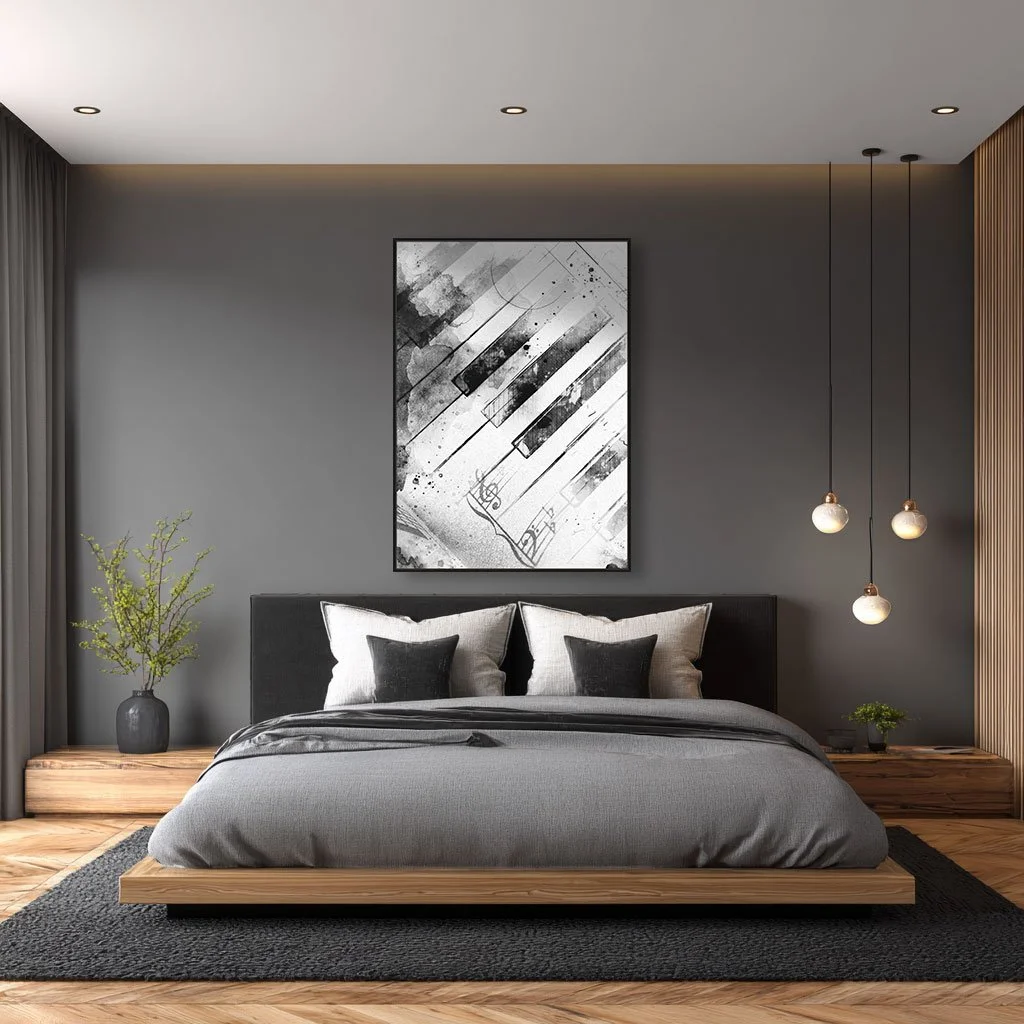
Large-scale artwork is increasingly popular because it creates immediate impact.
Choosing the Right Size and Scale for Your Artwork
One of the most common mistakes is choosing artwork that is too small.
As a general rule, artwork should span around 60 to 75 percent of the width of the furniture it sits above. This creates balance and visual harmony. Pieces that are too small can feel disconnected, while oversized works can overwhelm a space if not handled carefully.
Large-scale artwork is increasingly popular because it creates immediate impact and simplifies decision-making. However, smaller works can be just as effective when grouped thoughtfully in a gallery-style arrangement.
Getting scale right is one of the fastest ways to make a space feel professionally designed.
Match or Contrast Your Interior Style
Artwork does not always need to match your interior style exactly. In fact, contrast often creates more interest.
A minimalist space can benefit from a bold or expressive piece that adds depth. A richly layered interior can be balanced with something more restrained. The key is to decide whether the artwork should blend in or stand out.
Popular styles in Australian interiors include abstract works, landscapes and textured or mixed media pieces. These styles are versatile and can either complement or elevate a space depending on how they are used.
The goal is not perfect coordination, but thoughtful integration.
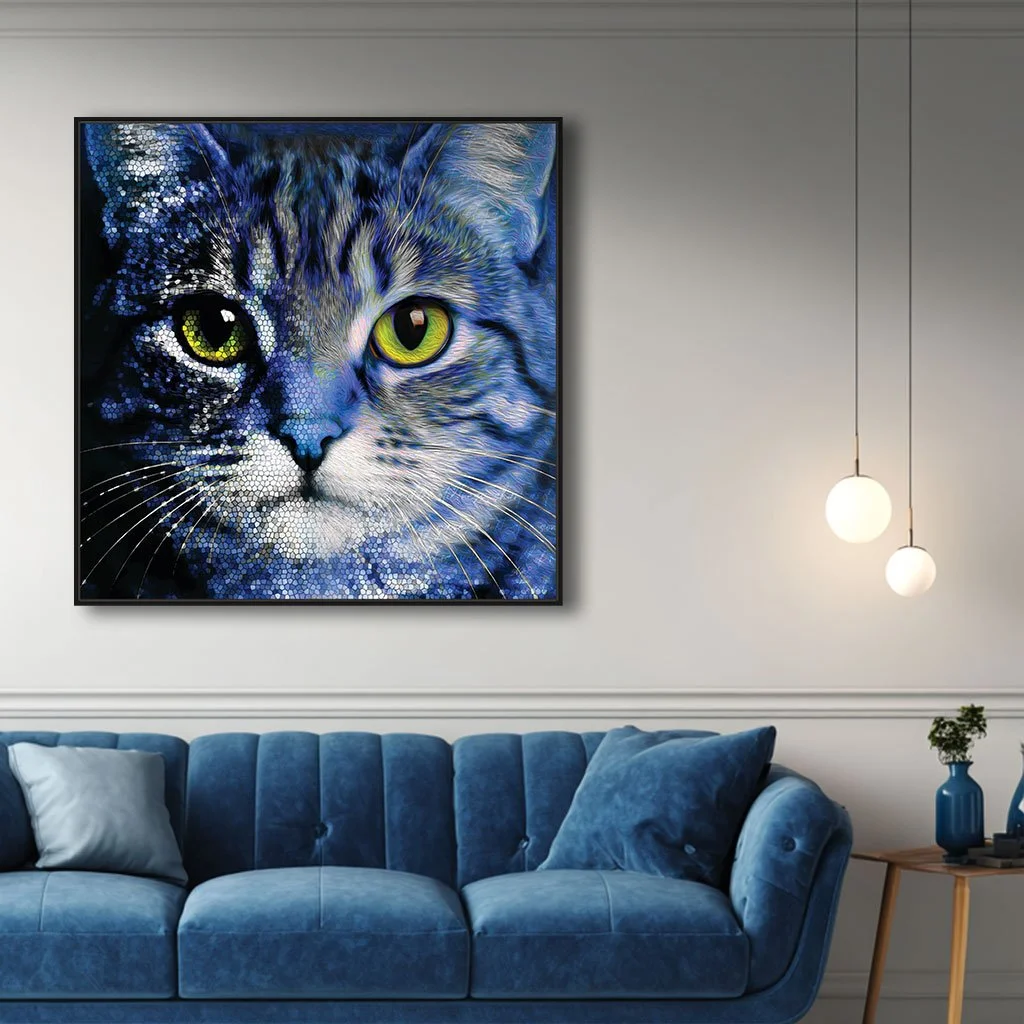
One way to get your colour strategy right is to complement the existing colour palette in the room.
Choose a Colour Strategy That Works
Colour plays a powerful role in how artwork interacts with a space.
There are three reliable approaches. The first is to complement the existing palette by picking up colours already present in the room. The second is to introduce contrast, which can create energy and draw attention. The third is to use artwork to anchor the space, particularly in neutral interiors.
Current trends show a strong preference for earthy tones, greens and blues, reflecting a broader desire for calm and connection to nature.
Colour psychology supports this, demonstrating that colour influences both emotional responses and perception of space.
Placement and Layout Matter More Than You Think
Where and how you hang artwork is just as important as what you choose.
The eye-level rule is a reliable starting point. Positioning artwork so that its centre sits roughly at eye height creates a natural and comfortable viewing experience.
Artwork can also be used to create focal points, particularly in entryways or main living areas. A single statement piece works well when you want clarity and impact, while gallery walls allow for more storytelling and flexibility.
Spacing and alignment are critical. Consistent gaps and clear structure help the eye move naturally through the space, creating a sense of flow.
Research into display design shows that placement and visual rhythm significantly affect how people engage with and interpret artwork.
To read more about how to hang artwork, read my blog: 5 Picture Hanging Tips Every Beginner Needs to Know.
Budget, Value and Perception
Many people hesitate when buying art, often due to concerns about cost or making the wrong choice.
Original artwork offers uniqueness and a stronger sense of connection, while prints provide accessibility and flexibility. Neither is inherently better. The right choice depends on your goals, budget and level of confidence.
A good starting point is to buy one piece you genuinely love, rather than trying to furnish every wall at once. Collections built slowly tend to be far more meaningful.
Studies into art buying behaviour show that hesitation is more often linked to uncertainty than lack of interest, reinforcing the importance of guidance and clarity in the decision-making process.
Innovative Ways to Approach Artwork Selection
To create a point of difference, consider moving beyond traditional approaches.
One emerging idea is mood zoning. In open-plan spaces, different artworks can be used to define emotional zones. For example, calm pieces in relaxation areas and more energising works in active or social zones.
Another approach is rotating artwork. Changing pieces seasonally or periodically keeps a space feeling fresh and allows for greater flexibility.
There is also growing interest in combining digital and physical art. Digital displays can complement traditional pieces, particularly in commercial or hospitality environments.
Finally, story-led curation has really gained traction. Instead of selecting pieces individually, artwork can be curated as a narrative across a space, creating a more immersive and meaningful experience.
This is a particular favourite of mine as it works for all kinds of interiors.
For example:
A business may have pictures and digital paintings of the local area, word art of its mission statement and values. Pictures of founders, abstract pictures in brand colours and logo art. Perhaps a timeline graphic along an entire wall, showing the history and growth of the business over the years.
At home, a hallway can tell a story of a trip overseas. Maps, framed tickets and receipts. Photograph clusters and artwork depicting the colours and scenes from the cities and landscapes visited, moments captured in a bar, a restaurant, or an excursion.
They both build a story in a wonderfully creative way.
All these approaches reflect a broader shift towards viewing art as part of experience design rather than simple decoration.
Common Mistakes to Avoid
Many issues come down to a few consistent mistakes.
Leaving artwork until the end of a project often leads to rushed decisions. Choosing pieces that are too small is another common problem. Matching too literally can make a space feel flat, while overcrowding walls creates visual noise.
Perhaps the most significant mistake is choosing art based purely on trends without any personal or contextual connection.
Avoiding these pitfalls can dramatically improve the final result.
Quick Checklist for Choosing Artwork
Before finalising your decision, ask yourself a few simple questions.
What do I want this space to feel like?
What is the function of the room?
Is the size proportionate to the space?
Does the artwork complement or elevate the interior?
Does it feel meaningful or connected in some way?
If you can answer these clearly, you are likely making a strong choice.
Still not sure how to take the first step?
If choosing artwork still feels overwhelming, try a little 10 Steps Left Philosophy.
Why not flip things completely and build your space entirely around the art?
When you see a piece of art you love, there is no thinking involved, you instinctively love it. Take away the limitations of trying to fit it into what you have and, instead, let it be the anchor for everything else in the space.
As John Keats once wrote,
“A thing of beauty is a joy forever.”
Closing Thought on Choosing Artwork
Choosing the right artwork isn't about getting it perfect — it's about being intentional.
When you understand how art interacts with space, mood and purpose, it stops feeling like a decorating decision and starts feeling like something far more personal.
When approached with clarity and intention, artwork becomes one of the most powerful tools for shaping how a space looks, feels and performs.
FAQs
How do I choose the right size artwork for my wall?
A good guideline is to choose artwork that is around 60 to 75 percent of the width of the furniture it sits above. This helps create balance and proportion.
Should artwork match furniture or contrast it?
Both approaches work. Matching creates cohesion, while contrast adds interest and energy. The choice depends on the desired outcome.
What type of art is best for a living room?
Living rooms often benefit from a focal point such as a large statement piece or a well-structured gallery wall that encourages engagement.
How high should artwork be hung?
Artwork should generally be hung at eye level, with the centre of the piece aligned to the average viewing height. Read more about hanging artwork here.
Is it better to buy original art or prints?
Original art offers uniqueness and depth, while prints provide affordability and flexibility. Art prints with a low print run give you something distinctive and rare without the price of original pieces. The best option depends on your priorities and budget.